Gear Lab, Part 2: My Helmet After Six Months — Reviewing Even the 'Wear-In'
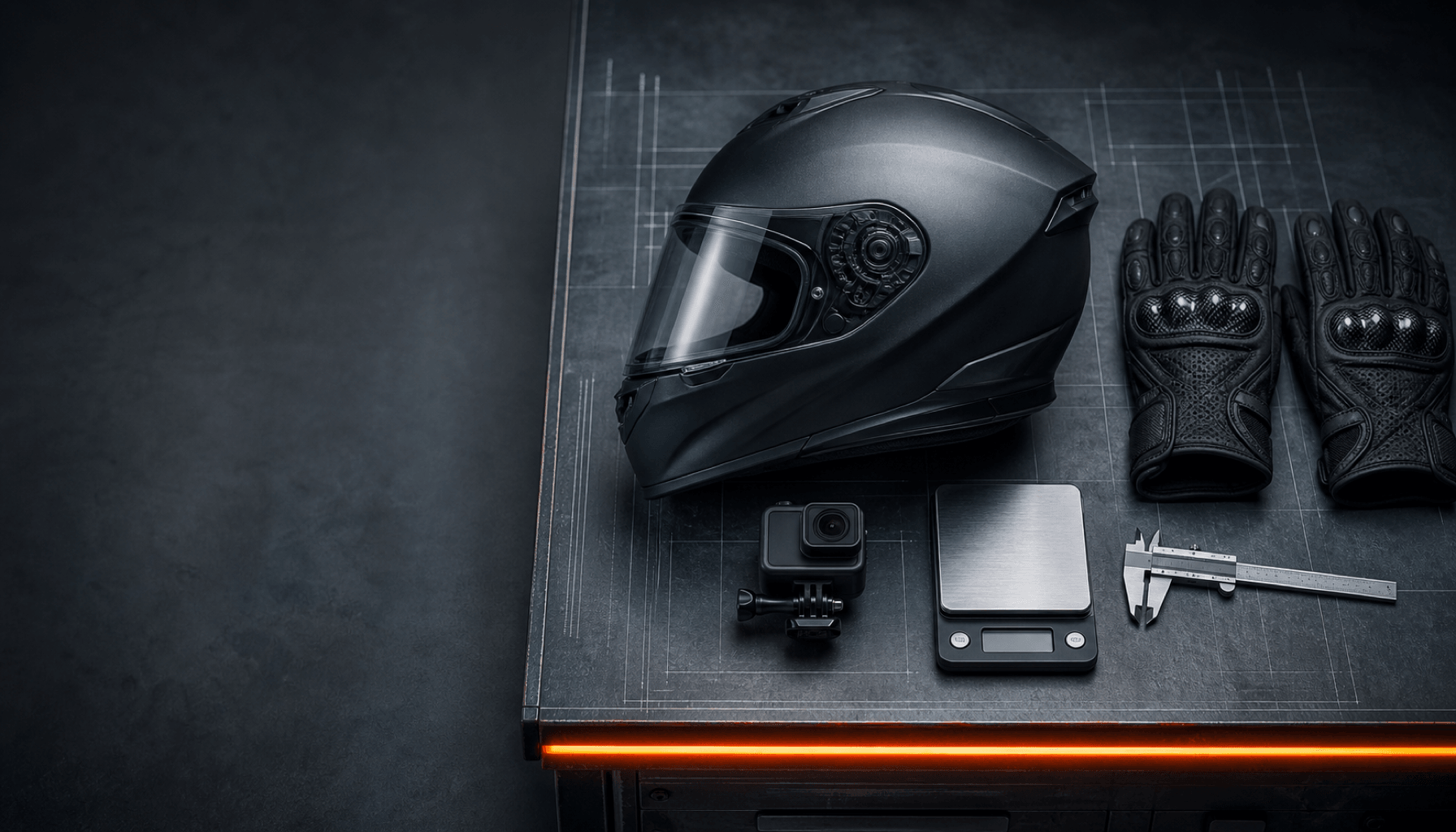
Interior padding compression, changes in wind noise, how the weight feels — none of it shows up in a brand-new review. The launch issue promised a 'six-month-later review,' and here's the hands-on installment. A gear's true performance shows up in how it wears in.
KEY TAKEAWAYS
- Six months of consistent logging can reveal how a helmet ages through liner looseness, wind noise, and perceived weight.
- Clean removable liners with mild detergent and dry them fully; if wear or looseness remains, consider compatible replacement padding.
As promised in our launch issue, this time I'm reviewing the "after" state of the full-face helmet I've worn almost daily for six months. First, a reminder of the ground rules: this lab neither promotes nor condemns specific products. So again this time I'll withhold the model name and instead present a general answer to "what happens to a helmet after six months," based on actual measurements from my own unit. Some background on my build: my head runs slightly long front-to-back; my use case is commuting plus weekend rides; over six months I logged about 180 wearing sessions totaling roughly 250 hours. Please read this with those conditions in mind.
First, the biggest change was in the interior padding. When new, the cheek pads pressed evenly against my cheeks, but over six months the foam's resilience clearly broke down. In numbers: the pressure I used to feel at the cheekbone when new has disappeared, and there's now more play when I shake the helmet side to side. This isn't a defect in the insulation — it's the fate of foam material. What matters is that a loosened fit affects both protection and quietness. Wind noise while riding has noticeably increased compared to when the helmet was new. The character of the sound has changed too — a whistling "whoosh" now appears at certain speed ranges that wasn't there before. My read is that the worn interior has created a new gap between the helmet and cheek, and wind is passing through it.
Next, the change in how weight feels. The helmet's actual measured weight obviously hasn't changed (I re-weighed it on a kitchen scale, within a few grams). But it feels "heavier." The cause, again, is the loosened fit — when the sense of oneness between head and helmet weakens, inertia transfers directly to the neck with every acceleration and deceleration. What was once part of your head becomes, six months later, luggage sitting on top of your head. This shift in sensation is information that never shows up no matter how many new-helmet impressions you read. The shield's opening/closing detents have also loosened. The ratchet's click feel has softened, and a few times it has popped open half a click from wind pressure while riding. It's not a degradation that directly threatens safety, but since it's a part you touch every day, its effect on satisfaction is significant.
As is this lab's practice, let me disclose what's behind the measurements too. My wearing log is a simple one-line-per-day entry in a notebook app — date, riding time, temperature, and any notes. But once you have 180 lines over six months, you can trace back and pin down when a felt change actually began. The subjective sense that wind noise has "increased" isn't, on its own, a record. So once a month, on the same stretch of road at the same speed range, I noted my ear's impression on a five-point scale. It's not a rigorous sound-pressure measurement, so it only has meaning as a relative change within this single unit — I'll be honest about that limitation here. Even so, a trend line showing "clearly worse from month three" is far more reliable than a hunch. I tracked the loosening fit with a simple monthly check: put the helmet on, shake your head side to side, and check how much your field of view shifts. Gear is an extension of the body, so degradation that creeps in a little every day is easy to miss. That's exactly why you need an external yardstick — a record. It might sound like a hassle, but a single line of notes determines the resolution of the review six months later. This is my own way of doing an honest job with a sample size of one.
So how do you deal with worn-in gear? The answer comes in two stages. Stage one is cleaning the interior. Pads that have absorbed skin oils lose their resilience even faster, so remove them, wash gently with neutral detergent, and dry completely. This alone restored a certain amount of fit. Stage two is using replacement interior parts. Many manufacturers offer cheek pads of different thicknesses as service parts, and swapping in a pad one size thicker brought the fit back much closer to new. The cost was about 10% of the helmet's own price. Whether or not you make this investment at the six-month-to-one-year mark makes a big difference to the helmet's effective lifespan, I think. Conclusion: a gear's true performance shows up in "how it wears in" and "how easy it is to address that wear." Next time you buy something, I'd like you to also check the availability of service parts. Next installment: I'll do the same hands-on measurement review of a mesh jacket I put through the wringer this summer, looking at moisture permeability and color fading.
What struck me again while doing this review is that gear isn't something you "buy and you're done with" — it's something you "use and raise." Six months of records even told me what I should buy next. The gear in your hands right now surely has the same story unfolding. I hope you'll listen to what your gear is telling you once in a while. I'll report back honestly on what face this jacket is wearing after six months.
Sources and references
Public information cited or consulted while preparing this original feature.