Scooters Only, Part 2: Packing for a 125cc Camping Trip — Under the Seat Is a Universe
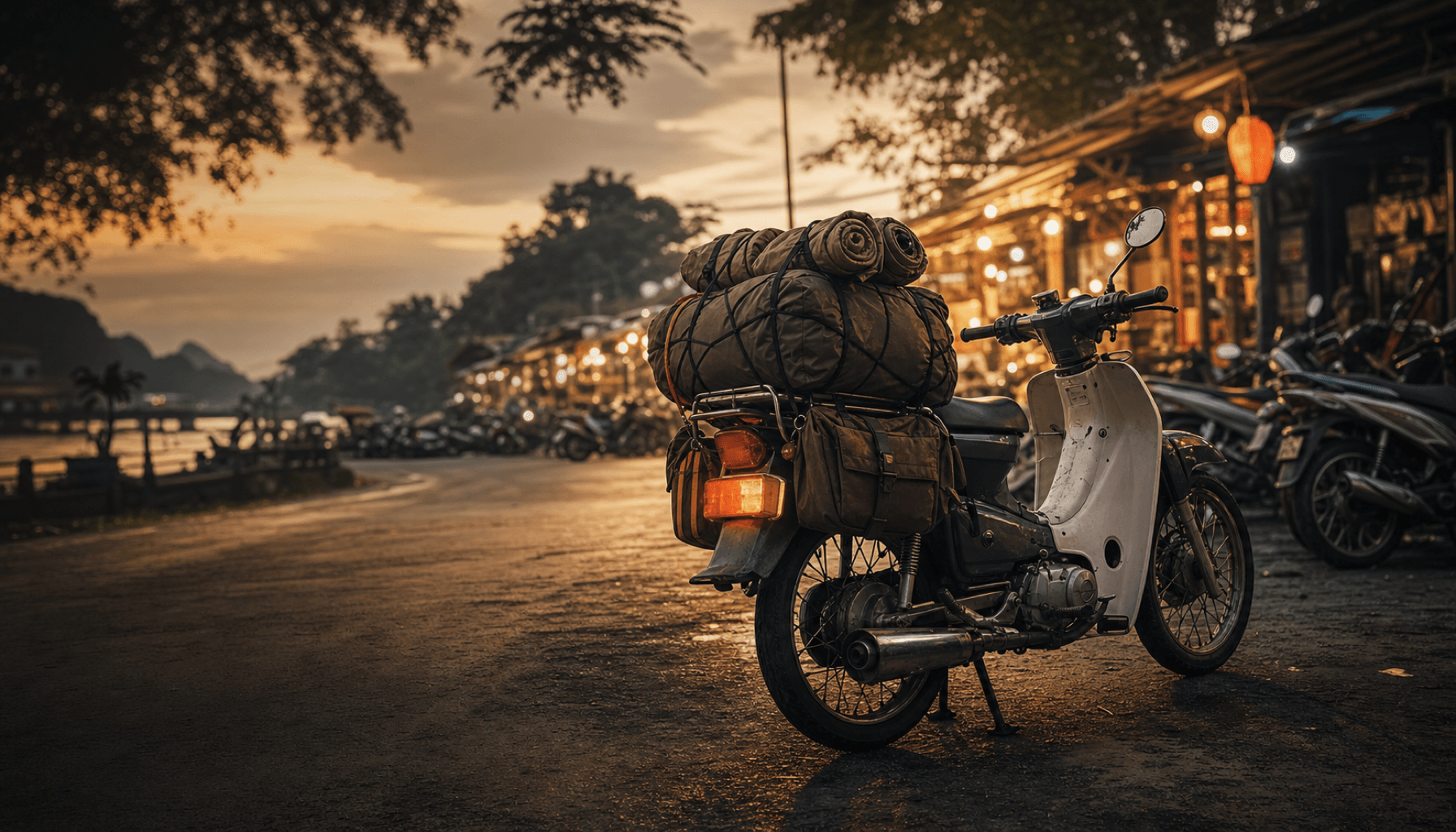
A tent, a sleeping bag, a firepit — it all fits on a 125cc scooter. After dozens of long-weekend camping trips, here's the full rundown, in order, of my three-tier packing system: under-seat storage, flat floor, and rear box.
KEY TAKEAWAYS
- For 125cc camping, divide storage among the under-seat bay, floor area, and top box, while keeping heavy items low.
- Practical packing is less about filling every space and more about reserving capacity for rain gear and supplies bought on the road.
As promised in our launch issue, this time I'm laying out everything about how I pack for the 125cc scooter camping trips I take every long weekend. Every time someone gives me the "camping on a scooter? No way you can fit everything" look, I've smiled to myself. You can fit it. Tent, sleeping bag, sleeping pad, firepit — it all goes on a 125cc scooter. And you don't need to spend a fortune on luggage gear like you would for a big adventure bike. A scooter comes with three storage spaces built in from the start: under the seat, the flat floor, and the rear area. Making the most of all three is today's topic.
Let's start with the basic principle: heavy, rarely-used items go low; light, frequently-used items go high. That's it. Let's get concrete. In the first space — under-seat storage (the helmet box) — I put heavy items and things I won't need until the very end: tools, a puncture repair kit, spare oil, spare belt parts (no chain here), and metal items like the firepit. Since the space under the seat sits close to the bike's center of gravity, packing heavy items there barely disturbs the ride at all. This is the single biggest advantage of scooter camping. Weight that a big bike can only carry in a high seat bag, we can swallow right into the dead center of the machine's balance.
The second space is the flat floor. Here I stand a waterproof bag containing the tent and sleeping pad upright, wedged between my feet. The key is width — choose a bag narrow enough that it doesn't get in the way of your feet or controls, and always secure it with straps. Never just set it there — it will slide forward the moment you brake at the first intersection. The third space is the rear box and rack. This is for things that are "light, bulky, and needed right away": sleeping bag, change of clothes, rain gear, camp chair. Rain gear goes on top — that's an iron rule. And my personal style is to leave about 20% of the rear box empty. Why? For grocery runs along the way. Stopping at a local supermarket before reaching the campsite to pick up food and local sake — that moment is the real main event of scooter camping. Anyone who sets off fully packed is throwing away one of the trip's pleasures.
I've been lecturing like an expert, so let me share my own failures too. When I was starting out, I packed everything that seemed "nice to have," stacking bags on top of the rear box with bungee nets in an overloaded style. On the way home from one long weekend, coming down a mountain pass, the rear end suddenly felt unsettled. I stopped to check, and the net had loosened, the load had shifted to one side, and the center of gravity was off. That scared me. Since then, I stopped relying on a single bungee net and switched to straps that secure the load as a flat surface. There's a rain lesson too: I trusted a cheap bag labeled "waterproof" through a downpour, and both my clothes and sleeping bag ended up soaked. The cold of that night at the campsite really got to me. Since then, I double up — sleeping bag and clothes each go inside a plastic bag before going into the waterproof bag. Lessons learned by falling stick with you the hardest, and honestly, the reason I can lecture confidently about packing now is simply that I have a large inventory of failures. If you're just starting out, feel free to use my failures as a shortcut. But make sure you experience your own small failures too — they're the seasoning that makes the stories of a trip interesting.
One last piece of advice before we even get to packing: keep only what you'd be in trouble without, and leave the "nice to have" stuff at home. Lightness is everything on a 125cc trip, and the less baggage you carry, the more vivid the scenery gets. What do you do if you forget something? You improvise on the spot. I still brag to my friends about the trip where I forgot my cooker and made baked sweet potatoes using nothing but aluminum foil from the grocery run. Failures are part of the trip too... Actually, writing all this makes me wonder how this loading story changes once we're talking electric scooters. Plenty of models have batteries filling the under-seat space. Since I declared last time that I'd "ride an electric one and see for myself," I'll properly verify that side of things too, another time. Next time: the next joy after packing — designing a long-weekend route. Combining ferries and back roads, how far can you get on a 125? Easy, convenient, fast, and free. Scooter travel is the best.
By the way, if reading this made you think "maybe I'll try it too" — keep your first overnight trip within an hour of home. Being close enough to head straight back if you forget something is more reassuring than you'd expect. Build a track record of success nearby first, then gradually go farther. Growing a trip is like packing — the stages matter. Well then, have a great long weekend. I'll see you again in the universe under the seat. Whether it's an engine note or a motor whir, the joy of the journey doesn't change.
Sources and references
Public information cited or consulted while preparing this original feature.