Culture Exploration, Vol. 2: Manufacturer-Sanctioned Deviation — The Aesthetics of Collaboration in the Brutale 1000 ABT
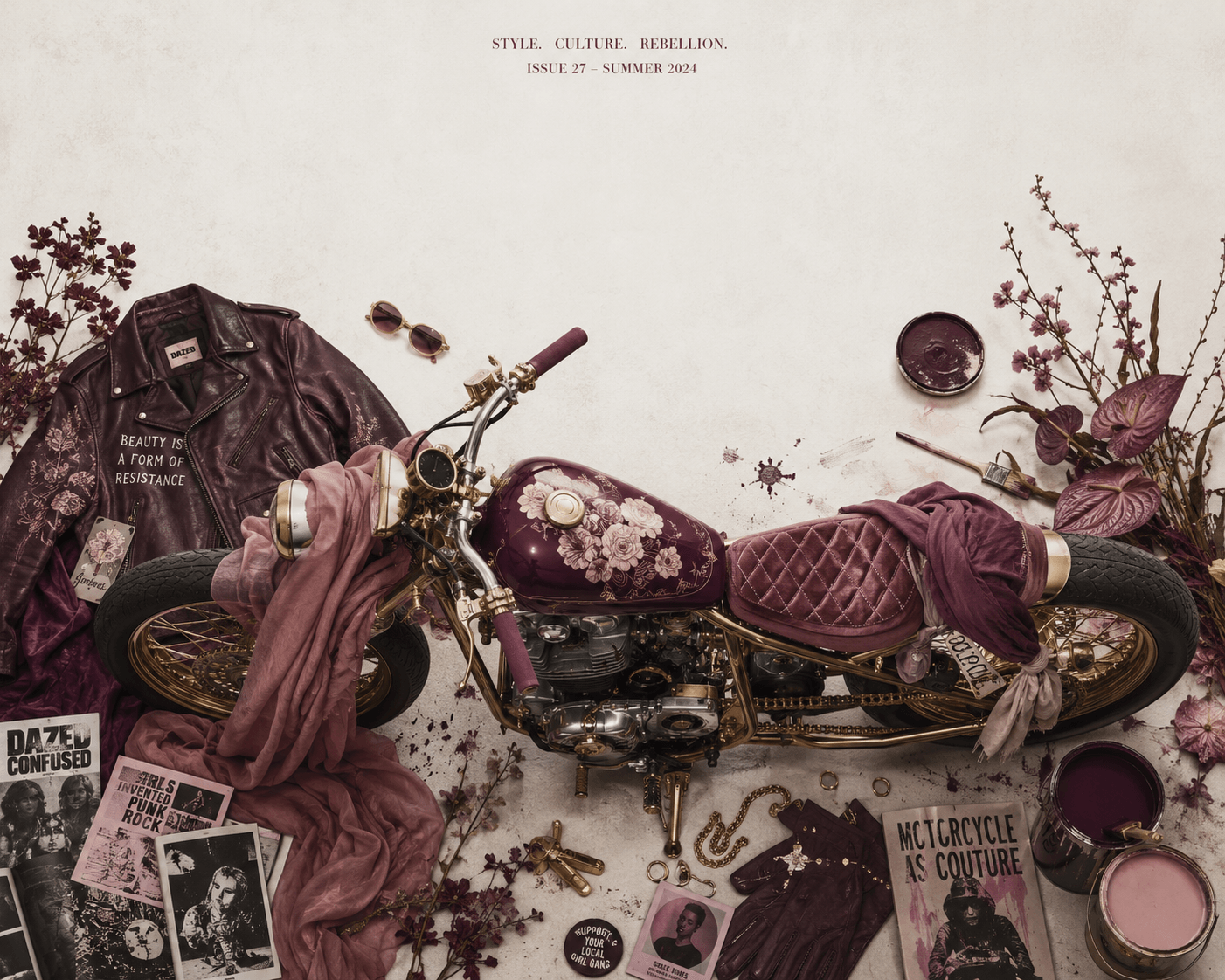
MV Agusta's special Brutale 1000 model, built with tuner ABT. A look, through an aesthetic lens, at the fascinating phenomenon of a manufacturer itself sanctioning 'deviation' — and at where the line with custom culture actually sits.
KEY TAKEAWAYS
- The 130-unit Brutale 1000 ABT combines MV Agusta and ABT design philosophies as a manufacturer-sanctioned form of deviation.
- An official collaboration succeeds not by adding logos, but by integrating both partners’ engineering and aesthetics into one motorcycle.
MV Agusta teamed up with tuner ABT to release a special Brutale 1000 model. When I first saw this news, what came to mind wasn't motorcycle specs — it was a scene from the fashion industry. That moment when a fashion house partners with a streetwear brand. The air of the establishment deliberately inviting "deviation" in. For Vol. 2, I want to write about this phenomenon of "manufacturer-sanctioned deviation." Since our launch issue took a broad look at the 2026 custom scene, this time I'm zooming into the single point within it that I find most interesting.
To begin with, customization is, by nature, a culture that exists outside the manufacturer. If the factory-shipped state is the "correct" one, then customizing — grinding, swapping, repainting — is a deviation from the official version. I love looking at custom motorcycles precisely because that deviation is where the rider's own aesthetic lives. Lately, though, this structure has gotten interesting. Manufacturers themselves have started partnering with outside makers to produce "official deviations." I think this Brutale 1000 ABT is emblematic of that. A tuner's hand officially enters a motorcycle that's practically an Italian craft object. To purists, this might raise an eyebrow, but I read it as a sign that the culture has matured.
In the fashion world, this kind of collaboration has long been standard practice. High-brand collaborations with skate culture are the emblematic case, and what made those work was that both sides respected the other's aesthetic. A collaboration that's just cashing in on the other's name gets spotted instantly and gets old fast. It's the same in the motorcycle world — I think whether a collaboration works comes down to whether "both makers' signatures are visible." The base design philosophy shows through, and another maker's interpretation layers on top of it. When two aesthetics cross without clashing, an official custom becomes a piece of criticism in its own right. Conversely, a "pretend" version with nothing but stickers and a limited color, no matter how rare, doesn't move me at all. That difference is hard to put into words, but you know it when you see it.
Let me trace the lineage of this kind of collaboration a bit. There's history to the "sanctioned crossover" between motorcycles and other fields. Going back, there were collaborations with leather brands and denim makers, an era when the rider's jacket became a fashion icon. There are cases of limited-edition machines painted by artists, treated as rolling artworks. More recently, crossovers with streetwear and sneaker culture have increased, and it's no longer rare for a motorcycle maker's logo to grace the cover of a culture magazine. What's interesting about this trend is that every crossover creates one more entry point for "people who don't know motorcycles" to encounter motorcycle aesthetics. I myself crossed over into motorcycle culture originally drawn in from the fashion side, by the strength of its visuals, so I know firsthand the value of more entry points. That said, the more crossovers happen, the greater the risk that the "core heat" gets diluted. A project that borrows nothing but a name can't move either fandom's heart. That's exactly why I always check first whether the maker's signature — the trace of who made what, thinking what — is visible.
I also want to think about what this trend brings to street builders. In a world where manufacturers go looking for collaboration partners, a path opens up for garage builders to step onto the official stage too. In fact, our own Kajimura tells me she's noticed, on the ground at custom events, more cases of builders discovered there going on to do work for manufacturers. Of course, there's also a risk of losing your teeth the moment you get officially absorbed — the paradox that the instant deviation becomes a product, it stops being deviation. That's exactly why I want to savor the tension between sanctioned collaboration and wild, untamed customization. Having both exist and stimulate each other is, I think, the healthiest state for a scene to be in. Next time, I'll write about the wild side — a street-born style that's caught my eye lately. A motorcycle where the builder's aesthetic took shape exactly as it was.
Writing this, I realized that what draws me to collaborations is probably a longing for "being changed by encountering someone else." The moment one aesthetic meets another and something that belongs to neither is born. The world of motorcycles still has plenty of stages left for that chemical reaction. That makes me happy. I'll keep looking forward, as a witness to the scene, to what crossover comes next. Beautiful things are always born right on the border line.
Sources and references
Public information cited or consulted while preparing this original feature.
![[Video] MV Agusta Unveils the Brutale 1000 ABT, a Special Model Collaboration With ABT](/_next/image?url=https%3A%2F%2Febcyllahemayvlukmyyw.supabase.co%2Fstorage%2Fv1%2Fobject%2Fpublic%2Farticle-images%2F1121d65b-0a25-4d21-9077-46c76a5ab102.jpg&w=3840&q=85)