World Custom Dispatch, Inaugural Issue: On a Beach in Biarritz, I Knew for Certain — Motorcycles Are Culture
Custom editor Motoo Kajimura launches a new column. From Wheels & Waves to Glemseck 101, a man who has soaked up the world's custom scenes firsthand delivers the kind of heat you can't get from a desk.
KEY TAKEAWAYS
- Custom culture includes not only finished motorcycles but workshops, build processes, local roads, and exchanges among builders.
- At multidisciplinary events such as Wheels & Waves, EV builds, handcraft, and art share one space and make emerging trends visible.
Instead of a hello, let me get one thing straight first. I'm not a critic. I'm someone who's gathered stories in the smell of oil in the workshop and the smell of exhaust and beer at event grounds. The reason I named this column "World Custom Dispatch" is simple: it's a dispatch — a letter sent straight from the field. Not breaking news, not a comprehensive survey — just what I saw, touched, and heard straight from the builders themselves, on the spot. I've come to believe motorcycles aren't just vehicles but culture, and I think that's because I've been hit, over and over, by a kind of heat you can only encounter in the field. I want to deliver that heat to you before it has a chance to cool.
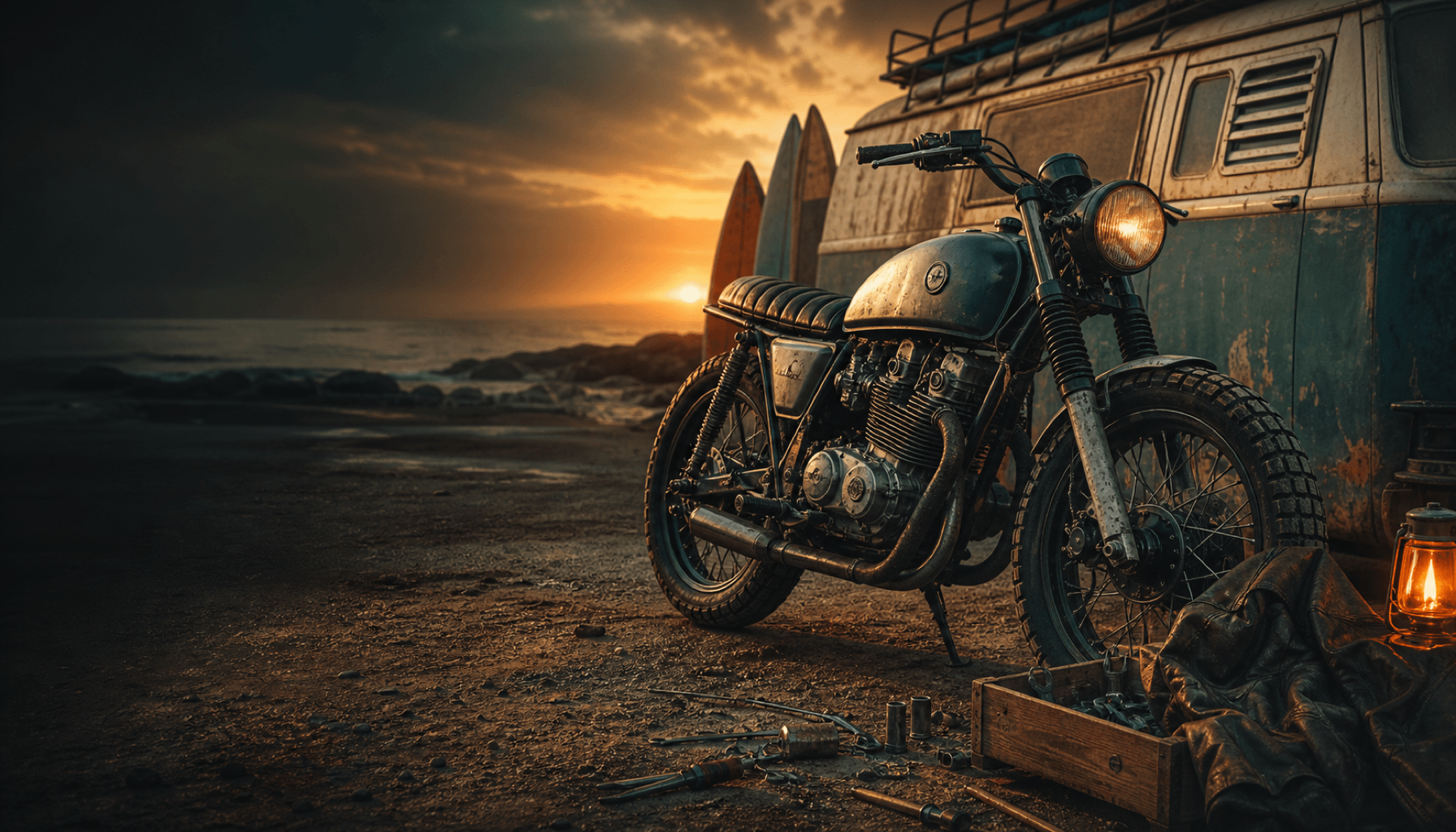
Since this is the inaugural issue, let me start with where it all began for me. Biarritz, France. Held every June in this surf town on the Atlantic coast, Wheels & Waves is a festival unlike any other in the world, where surfing, custom motorcycles, and art all blend together. The first time I paid my own way there, what surprised me wasn't the bikes lined up at the venue. It was the sight, along the road leading there, of custom bikes bearing license plates from all across Europe riding in under their own power. Their bikes aren't perfect. The old paint shows through beneath the new, and the weld marks aren't hidden. But that's what makes them good. When I talk with builders and owners, only about thirty percent of the conversation is about the machine — the rest turns into talk about their lives. Their work, their family, what they chose to cut away and what they chose to keep. In the end, a custom build is a story of how a person's way of living shows up on their machine. The sun sets over the beach, and somewhere in the distance, someone kicks their engine to life. In that moment, I decided I'd do this job for the rest of my life.
Let me talk about where the scene is heading, too. The neoclassic wave has run its course, and right now there are two trends worth watching in the field. One is EV-based customs. I know opinions are split, and honestly, I was skeptical myself at first. But my thinking changed at Glemseck 101 in Germany — that gritty event where they run 1/8-mile sprints on a disused airfield — the moment I watched an electric machine eat an internal-combustion bike alive. Speed silences culture. Even without the sound, fast is fast. From there, how builders craft their own identity is where their skill really shows now. The other trend is the rise of Asian builders. Shops in Thailand and Indonesia now take orders directly from Europe and America over social media. Just as the Yokohama Hot Rod Custom Show has long remained a goal for builders worldwide, custom culture has no single center. Scene connects directly to scene, and heat passes between them. This shift runs in a river separate from manufacturers' new-model announcements, but I believe it eventually flows into the same sea. And it's always the field that senses that confluence first. That's why I go to the field.
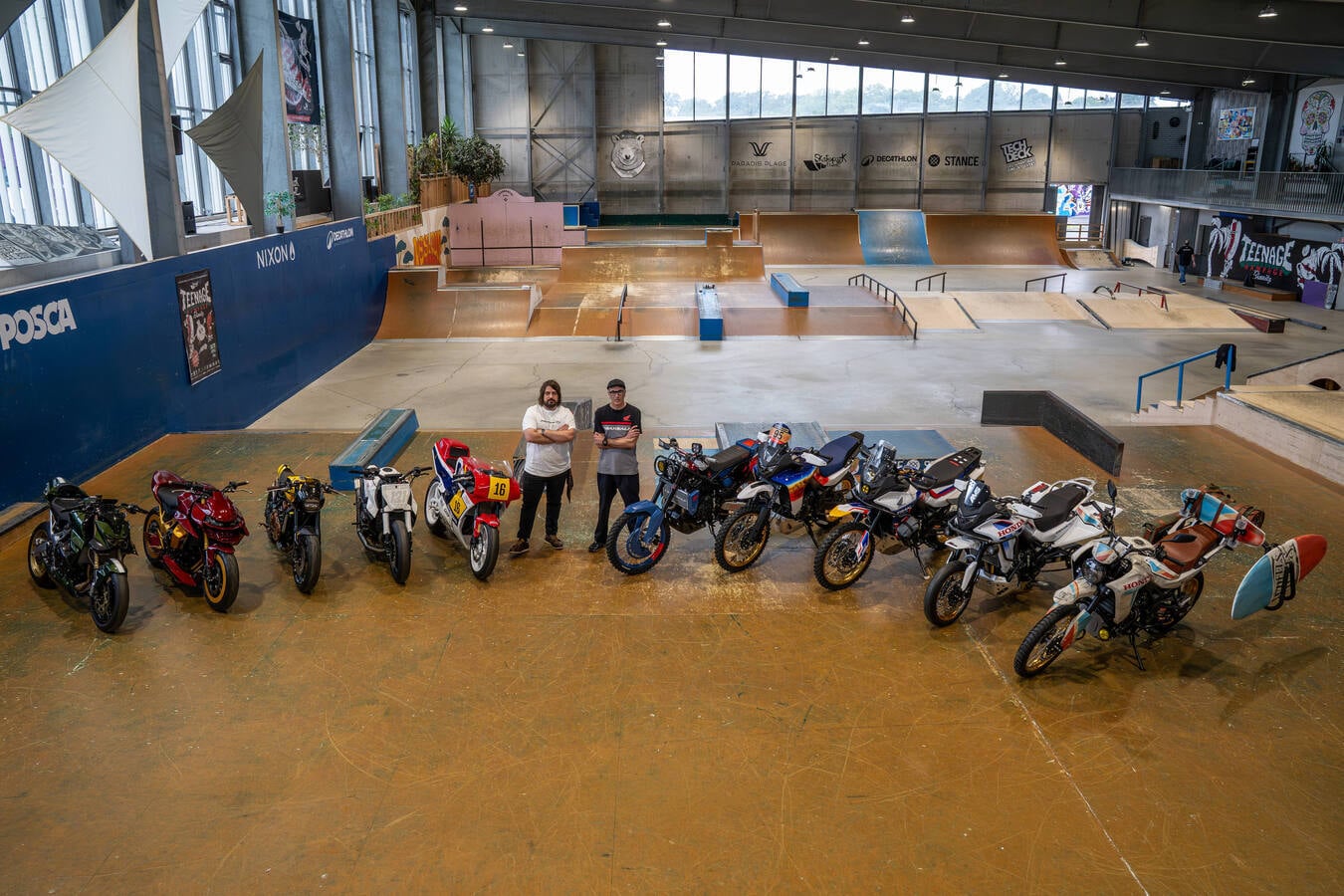
I want to talk about workshops too. Behind the glamour of the events, what I love most is a garage on an ordinary weekday. In a small shop down a back street in Barcelona, I once watched a young builder remake a single tank three times over. When I asked why, he told me, "The first two times I built it for myself. Only the third time did it finally fit the owner's life." That kind of feeling never comes through in an email interview. All I can say is you have to go to the field to understand it. The way tools are laid out, where the failed attempts get set aside, the easy distance at which a regular helps themselves to coffee — a workshop is, before it's a place of technique, the very reason people gather in the first place. The same air flows through old Japanese classic-bike shops and European café-racer specialists alike. That air, unchanged no matter what border you cross, is what I mean when I say "culture."
In this column, I'll write about what I find at events, in builders' workshops, and out on the street. I'd like to say weekly, but I can only promise one thing: I won't write from hearsay. I'll only write about what I've seen, touched, and the people I've actually talked to. So forgive me if the pace gets a little uneven — I'll make sure what's inside the envelope is worth it. As for what's coming up: in September I'll be flying to Glemseck 101 in Germany. At year's end, I plan to soak up Japanese builders' new work at the Yokohama Hot Rod Custom Show, with some Asian shop-hopping worked in between. Wherever I go, whoever I meet, whatever I see — I'll send a letter back to this space each time. If, by the time you finish reading, you find yourself looking at your own bike a little differently, this dispatch will have done its job. Motorcycles aren't vehicles — they're culture. Come along with me on the trip to prove it.
Sources and references
Public information cited or consulted while preparing this original feature.
![[Video] MV Agusta Unveils the Brutale 1000 ABT, a Special Model Collaboration With ABT](/_next/image?url=https%3A%2F%2Febcyllahemayvlukmyyw.supabase.co%2Fstorage%2Fv1%2Fobject%2Fpublic%2Farticle-images%2F1121d65b-0a25-4d21-9077-46c76a5ab102.jpg&w=3840&q=85)