Japan Winding Roads Journal, Part 2: Beat the Summer Heat on the Venus Line — Building a Trip Around Altitude
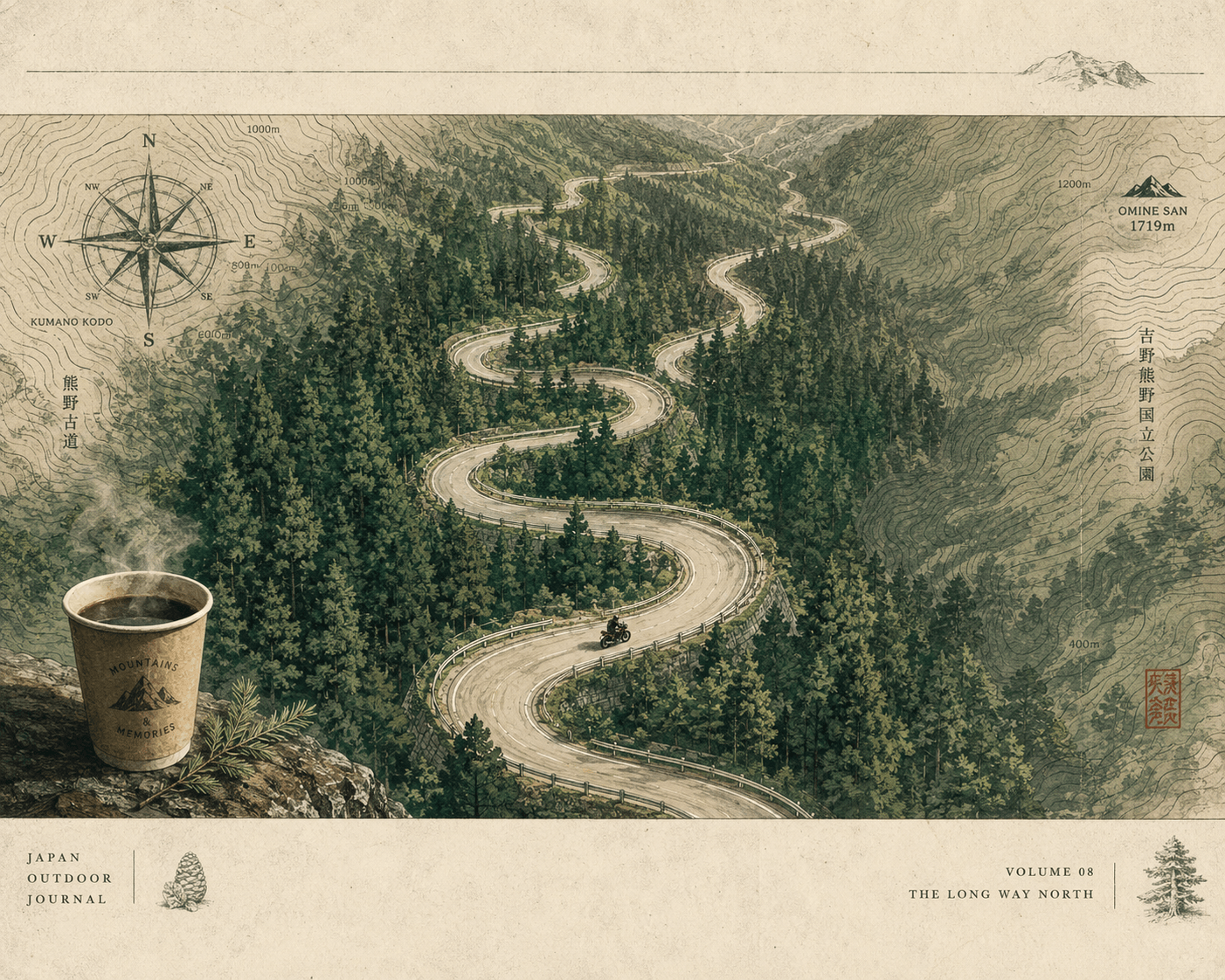
In the height of summer, riding the flatlands turns into an ordeal. So beat the heat with altitude instead. Centered on the Venus Line toward Kirigamine, here's how to build a comfortable midsummer tour, down to how to make the most of roadside stations.
KEY TAKEAWAYS
- The 75.2-kilometre Venus Line makes altitude itself a planning tool for escaping summer heat on a motorcycle.
- An early start, rain protection, a warm layer, hydration, and road-status checks form one practical plan for rapidly changing highland conditions.
Last time I wrote about the understated Shigasaka Pass, a prefectural road in Okuchichibu. Part two goes with the season and covers the classic summer route. It's this hot out. Honestly, touring endlessly along a flatland trunk road is close to an ordeal. Engine heat rises at every red light, and hot air blows straight through your mesh jacket. So let's flip the approach: instead of escaping horizontally, escape vertically. It's said that for every 100m gain in altitude, the temperature drops roughly 0.6°C. In other words, climb to a highland road at 1,500-1,900m elevation, and a world some 10°C cooler than the lowlands awaits. The prime example is the Venus Line, running toward the Kirigamine and Utsukushigahara area of Nagano Prefecture.
The appeal of the Venus Line is that it delivers both the pleasure of a winding road and a wide-open sense of openness at the same time. Climbing up from the Chino side, the view opens up once near Lake Shirakaba, and from around where the road wraps the foot of Mt. Kurumayama, it winds through open grassland with nothing blocking the view. Unlike a mountain pass that runs through tunnels of forest, you get to ride while gazing at the sky and the ridgeline. This kind of "open highland winding road" is rare in Japan, and first-timers typically stop partway through to take photos. I still do, even now. Sipping milk bought at a roadside station while spreading out a map, wondering which side road to take next — that time alone might as well be the main point of the trip.
That said, midsummer highland touring has some tricks to how you put it together. First, start early in the morning. The rule is to gain altitude before the city heat kicks in fully — reach the highlands in the morning, and you can spend the hottest part of the day somewhere cool. Setting off early also means beating the buildup of sightseeing traffic, which is another point in its favor. Second, prepare for sudden weather changes. Afternoons in the highlands are prone to sudden showers and fog, and the temperature can drop sharply too. Even in midsummer, always keep a light windproof layer and rain gear under the seat. Third, plan your hydration. When it's cool you might feel like you're not sweating, but that's just the riding wind drying you off — your body is still steadily losing water. Just being mindful to take a sip at every rest stop makes a huge difference in how tired you feel on the way home.
If you're riding the Venus Line, build in some enjoyment around the road too. The Kirigamine area is a treasure trove of alpine flora, including Nikko day-lilies, and during the season when the summer slopes turn yellow, a field of flowers drifts by at the edge of your vision as you ride. Extend out to the Utsukushigahara area and you'll find a museum standing on a plateau at roughly 2,000m elevation, where the scenery made by outdoor sculptures and passing cloud shadows is worth stopping your bike for. And when in Shinshu, it has to be soba. A bowl of cold soba noodles at a small shop in a village at the foot of the pass sinks in deep to a body chilled by the highland air. Descend as far as Shimo-Suwa or Kami-Suwa and you'll find plenty of day-use hot springs too, so you won't run short of places to rest on the way back. One more thing: true to its name, Kirigamine ("fog peak") is prone to fog. If visibility turns white, don't push through — wait it out at a pull-off. Highland fog moves fast, and it's common for it to clear up almost unbelievably after just 30 minutes. Sipping coffee from a thermos during that wait is, in my view, part of the trip too. How you spend time that doesn't go according to plan is exactly where a traveler's experience shows.
And a final word about the ride home. The real trial of a heat-escape tour is the lowlands after you come back down. Evening city heat is hard on a body that's gotten used to highland cool. So I make a point of taking one long break right where the descent ends, and setting off again once the sun has started to lower. Building in a roadside station or day-use hot spring as a "shelter to wait out the heat" keeps the whole trip's impression good right through to the end. The satisfaction of a tour is, in truth, decided in that last hour. Next time, I'm thinking about a "coastal evening route" to close out summer. After a trip that cools you with altitude, next comes one that cools you with sea breeze. I'm already spreading out the map and drawing the next line.
One more thing before I go. On a famous road like the Venus Line, traffic inevitably increases on weekend afternoons. Getting distracted by the scenery, or stopping on the road itself to take photos, is dangerous both to yourself and others. If you're stopping, use a pull-off, and only take photos once you've come to a complete stop. Let's keep the courtesy among fellow travelers so that everyone who came up to breathe the highland air can go home feeling good. That, too, is part of the art of travel. Well then, have a good summer trip. If we cross paths at the top of the pass, let's share a coffee. I'll always have the map spread out, waiting. The next great view is sure to become your fuel. May a good wind blow through your itinerary under the summer sky.
Sources and references
Public information cited or consulted while preparing this original feature.